Lumenoid, Explained Visually
This page presents a visual, non-authoritative explanation of the Lumenoid AI Framework. It uses simplified diagrams to show how responsibility, uncertainty, and human agency are preserved structurally — without relying on persuasion, personality, or implied authority.
The diagrams below are conceptual rather than prescriptive. They describe how the framework behaves, where it stops, and how it ensures that accountability remains human-held as systems scale.
Problem Illustration

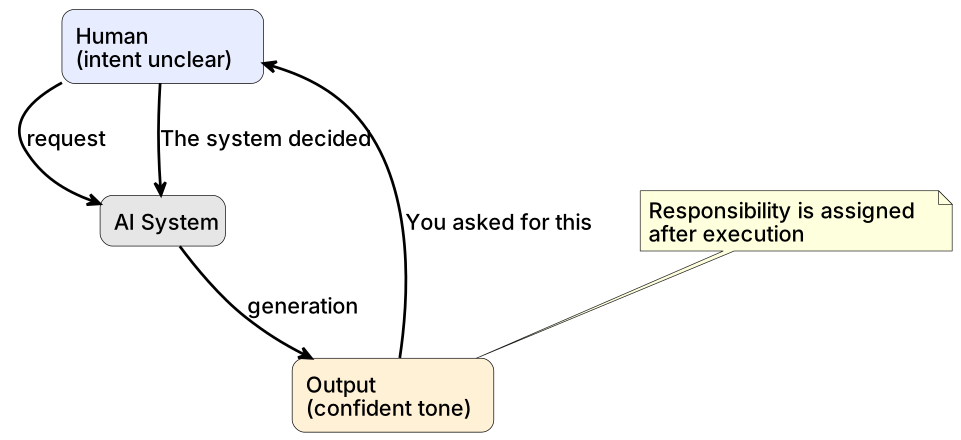
When responsibility is assigned after execution, authority and accountability become blurred.
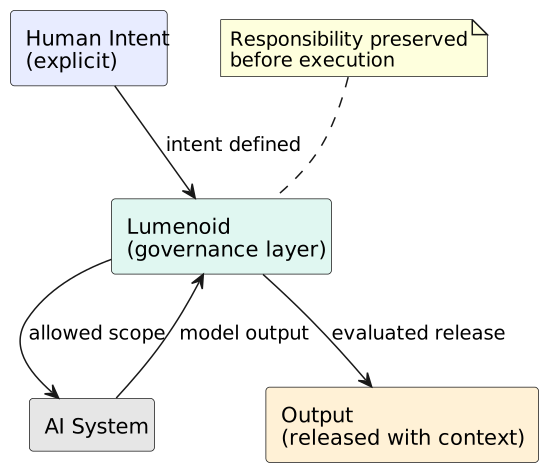
Responsibility Drift vs Structural Governance
Before
After
Core Flow
The Lumenoid governance loop evaluates outputs before interaction, reducing scope or refusing release when responsibility cannot be preserved.
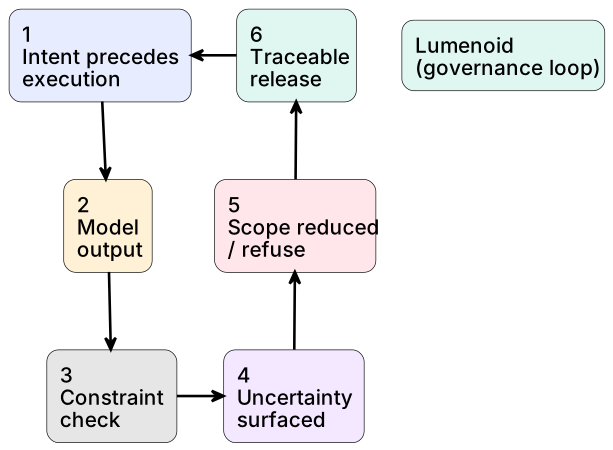
Safeguards
These safeguards are structural invariants. They do not optimize behavior or make decisions — they determine whether an output is allowed to proceed at all.

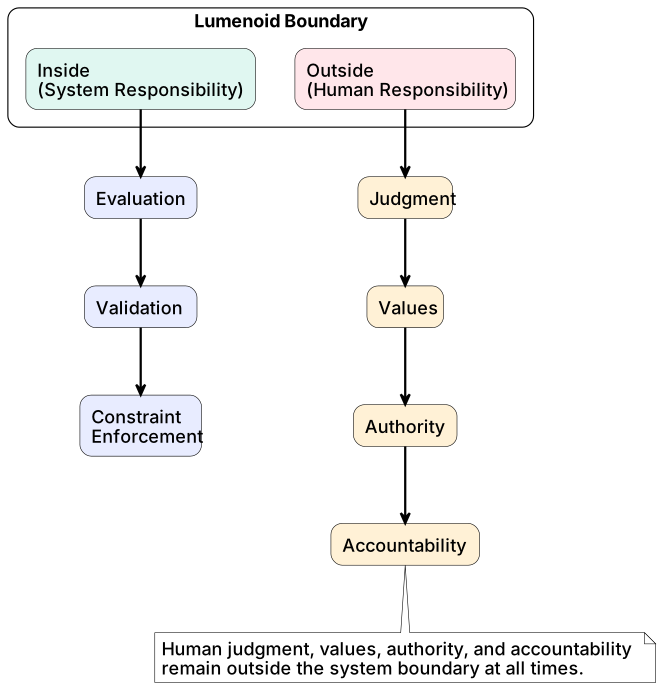
Boundary
This boundary defines where the system stops. Evaluation, validation, and constraint enforcement occur inside the system, while judgment, values, authority, and accountability remain human-held outside the boundary.